Pressure Washing vs. Power Washing: Is There Actually a Difference?
If you have ever priced exterior cleaning in Vero Beach, you have probably seen both terms used as if they mean the same thing. One company advertises pressure washing, another offers power washing, and the quotes look near identical. It is easy to assume the difference is only marketing. There is a real difference, though, and it comes down to a single factor: heat. Once you understand that, choosing the right method for each surface around your home becomes much simpler.
The Short Answer: Heat Is the Only Real Difference
A pressure washer forces water through a narrow nozzle at high pressure to strip dirt, algae, mildew and loose grime from a surface. The water it uses is cold, or at the same temperature as the water coming from your tap.
A power washer does exactly the same thing, but the water passes through a heating element or burner first. Commercial hot-water units commonly heat the water to somewhere between 180 and 200 degrees Fahrenheit before it reaches the surface. The pump, the hose and the pressure range are essentially the same, typically somewhere between 1,500 and 4,000 PSI. The only thing that changes is the temperature of the water.
A simple way to remember it: pressure washing is force on its own, while power washing is force plus heat. That one change decides which grime each method can shift and which surfaces each one can safely touch.
What Is Pressure Washing?
Pressure washing relies on the mechanical force of the spray. Cold water, driven at high pressure, lifts dirt and organic growth from a surface, and a cleaning solution is often applied first to loosen the grime so the rinse can carry it away.
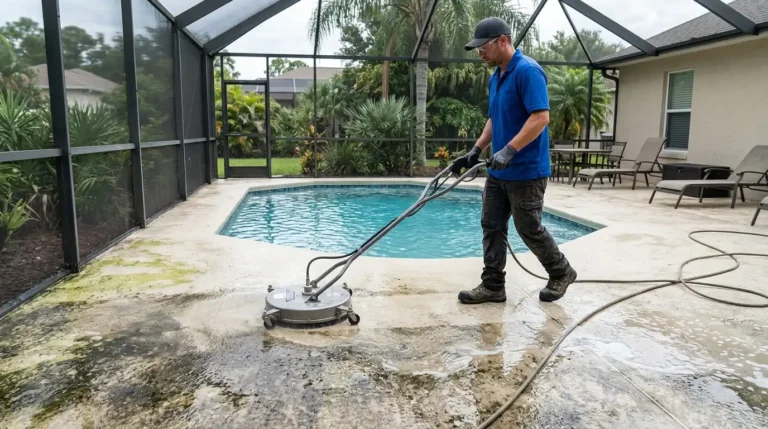
It is the workhorse of residential exterior cleaning. Around a Vero Beach home, pressure washing handles driveways, patios, walkways, fences, decks and siding, and it is the standard approach for routine maintenance cleaning. With the right nozzle and pressure setting, it removes the everyday buildup Florida homes collect: pollen, dust, algae, mildew, cobwebs and the dull film that settles on shaded surfaces.
For more delicate surfaces, the same equipment is used at much lower pressure with a stronger cleaning solution. That method is called soft washing, and it is how siding and roofs are cleaned without the risk of damage from a high-pressure stream. If you want the full comparison, our guide to soft washing vs. pressure washing explains when low pressure is the right call.
What Is Power Washing?
Power washing adds heat to the equation. Hot water molecules move faster than cold ones, and that extra energy helps break the bonds between grime and the surface it is stuck to. Heat is particularly effective against oily, sticky and deeply embedded substances that cold water tends to push around rather than lift.
That makes power washing the stronger choice for heavy-duty jobs on hard, non-porous surfaces: concrete, brick and stone. It is often used for grease-stained concrete, dried salt deposits, chewing gum on commercial walkways, and heavily soiled areas such as restaurant pads, loading docks and auto shop floors. The heated water also helps detergents work faster, so stubborn buildup can come off in fewer passes.
The trade-off is that heat brings its own risks. Hot water can warp vinyl, raise the grain on wood, crack older brick and mortar, and damage painted or soft stone surfaces. It can also scald: water at 140 degrees Fahrenheit can cause a serious burn in seconds, which is one reason hot-water work calls for trained handling and proper protective equipment.
Pressure Washing vs. Power Washing at a Glance
Water temperature is the dividing line, and everything else follows from it. Pressure washing uses cold or ambient-temperature water at high pressure, suits general dirt, algae, mildew and light to moderate buildup, and is the safer default for most residential surfaces, including siding, wood, painted surfaces and roofs when paired with soft washing. It uses less energy because there is no heating system to run. Power washing uses heated water, commonly 180 to 200 degrees Fahrenheit, at high pressure, suits grease, oil, chewing gum, dried salt and deeply embedded grime, and is best kept to hard surfaces such as concrete, brick and stone. It uses more energy, and the heat adds a risk of damage on softer materials.
Neither method is better in the abstract. The right question is always which one matches the surface and the stain in front of you.
Which Method Suits Each Surface Around Your Home?
Driveways and concrete are the most flexible surfaces. Routine cleaning is a pressure washing job, usually with a surface cleaner and a degreasing solution. Set-in oil and grease stains are where hot water earns its keep, since heat breaks down petroleum residue that cold water leaves behind. Our guide to oil and grease stains on a concrete driveway explains how fresh stains differ from old ones and what actually lifts each type.
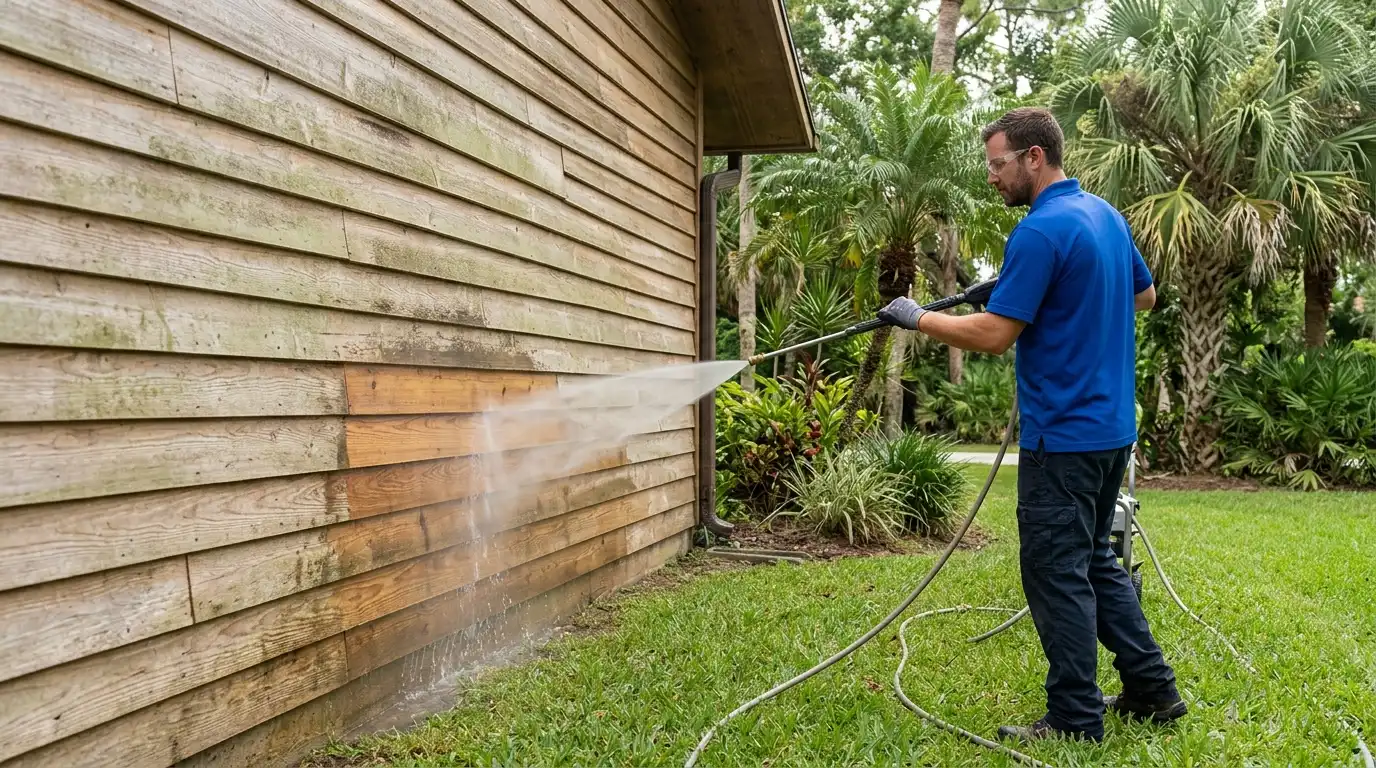
Siding should be cleaned with cold water, and in most cases with soft washing rather than high pressure at all. Vinyl can warp under heat, and high pressure can drive water behind panels. Our house washing service uses the low-pressure approach that suits Florida siding, including the algae growth that turns shaded walls green.
Roofs are never a high-pressure job, heated or not. Asphalt shingles lose granules under a strong stream, and walking on tile risks cracks. Roof cleaning is a soft wash job, using a cleaning solution and a gentle rinse. The black streaks so many Vero Beach roofs show are algae, and they respond to treatment rather than force.
Wood decks and fences need cold water at low pressure. Heat can raise wood fibers and cause furring, and high pressure can gouge soft boards. The goal is to clean the surface without opening up the grain.
Stucco needs the gentlest touch of all. It is porous and can crack or etch under pressure, and heat only adds to the risk. Stucco is cleaned by soft washing, as we explain in our guide to pressure washing stucco without damaging it.
When Hot Water Earns Its Keep in Florida
Florida gives hot water plenty to do. Salt air leaves dried salt deposits on hard surfaces near the coast, outdoor kitchens and grill areas collect grease that cold water struggles with, and concrete that has gone years without cleaning can hold ground-in grime that a cold rinse only lightens. After hurricane season, driveways and patios can carry a mix of storm debris staining and months of organic growth that benefits from the extra cleaning power heat provides. For most homes, though, hot water is an occasional tool rather than the default, with heat brought in only for the specific stains that need it.
Why the Terms Get Mixed Up
There are a few honest reasons the two terms blur together. The machines look nearly identical from the outside, and many companies own both cold-water and hot-water units. Plenty of local businesses use the terms interchangeably in advertising, even when their equipment is one or the other, and for many everyday jobs the result looks the same either way, so customers rarely have a reason to ask which one was used.
What matters is not the label on the quote but the method matched to your surface. Before booking, it is worth asking which one a company plans to use on each part of your home, and that is exactly the kind of detail covered in our guide to what to expect during a professional pressure washing visit.
Questions Worth Asking Before You Book
Will the water be heated or cold for my surface? A company should be able to tell you plainly, and the answer should change with the surface. Siding, wood and roofs should always be cold water and low pressure.
What pressure and nozzle will you use? High pressure on the wrong surface is how damage happens, and it is the most common of the DIY pressure washing mistakes homeowners make.
Frequently Asked Questions
Is power washing better than pressure washing?
Not better, just different. Power washing is stronger on grease, oil and deeply embedded grime because of the heat. Pressure washing is safer and more versatile for everyday residential cleaning. The best method depends on the surface and the stain.
Can power washing damage concrete?
On sound concrete, hot water at the right pressure is safe. On cracked, spalled or already weakened concrete, heat and pressure together can make the damage worse. A professional will check the condition of the surface before choosing a method.
Do I need power washing for my driveway?
Usually not. Most driveways clean well with pressure washing and the right degreasing solution. Power washing is worth considering when the driveway has old oil stains, heavy grease buildup or years of ground-in grime.
Is soft washing the same as pressure washing?
No. Soft washing uses low pressure and a cleaning solution to treat growth such as algae and mildew, then rinses gently. It is the method used for siding, roofs and stucco, where high pressure would cause damage. Our soft washing vs. pressure washing guide explains the difference in full.
If a quote just says “pressure washing,” how do I know what I am getting?
Ask. A reputable company will explain whether the water will be heated, what pressure they will use and how they will treat each surface. If they cannot answer, keep looking.
The Bottom Line
Pressure washing and power washing are not two names for the same service. One uses cold water and force, the other adds heat to the force. Heat makes a real difference on grease and stubborn grime, and it brings real risks on softer surfaces. The right choice is the one matched to your surface and your stain, and a good exterior cleaning company will explain that choice before the work starts.
If you are not sure which method your home needs, call Pressure Washing Pros at 877-510-5549 and we will talk through your surfaces and recommend the right approach.