Cleaning a Deck Before Staining or Sealing: Timing and Prep
A new coat of stain or sealer can only be as good as the deck underneath it. Dirt, gray oxidation, mold, algae, and old finish sit between the wood and the coating, and they stop stain and sealer from bonding. When the bond fails, the finish peels, flakes, or wears away in patches, often much sooner than expected. Cleaning first is not an extra step. It is the step that gives the finish a clean, open surface to grip.
This guide walks through the timing and preparation for cleaning a deck before staining or sealing, from clearing the deck to testing whether the wood is dry enough to coat. The steps work for most wood decks, and they matter even more in Vero Beach, where humidity, shade, and frequent rain slow drying and help mold and algae return.
Why Cleaning Matters Before Staining or Sealing
Stain and sealer need to soak into clean wood fibers. Gray oxidation is a layer of dead, sun-damaged fibers. Mold and algae add a slippery film, and dirt fills the pores that stain should enter. Old, loose finish has the same effect. A coating applied over any of these layers bonds to the grime, not to the wood, so it lifts away when the grime lifts.
Cleaning also shows the true condition of the deck. Once grime is gone, soft boards, raised grain, loose fasteners, and areas that need a light sanding are easy to see. It is far better to find those problems before coating than after a new finish has been applied over them.
How to Prepare a Deck, Step by Step
Clear the Deck and Sweep
Remove furniture, planters, grills, and anything else standing on the deck, and move potted plants away from the work area. Sweep the boards thoroughly, clearing leaves and dirt from gaps between boards. A clean, clear deck lets the cleaner reach the wood evenly and keeps debris from being washed into the grain.
Pre-Wet the Deck and Nearby Plants
Wet the deck lightly before applying cleaner, and pre-wet nearby plants and grass. Wet wood takes cleaner more evenly, and wet plants are less likely to be harmed by cleaner or rinse water. Keep a hose nearby so plants can be rinsed again after the deck is rinsed.
Apply a Deck Cleaner and Let It Dwell
Apply a deck cleaner made for the job, following the directions on the product. Use a cleaner, not a stripper, unless old stain needs to be removed. Let the cleaner dwell for 5 to 15 minutes, and do not let it dry on the wood. Keep the surface damp, work in sections on a large deck, and scrub with the grain using a stiff deck brush where dirt, algae, or gray oxidation is stubborn.
Rinse Thoroughly, Then Brighten the Wood
Rinse thoroughly with clean water, working with the grain until the water runs clear and no cleaner remains. Then apply a wood brightener. A brightener neutralizes the pH left by the cleaner, helps open the pores of the wood, and restores a more even tone. Rinse again as directed, and let the deck dry completely before any sanding or coating.
Pressure: Let the Cleaner Do the Work
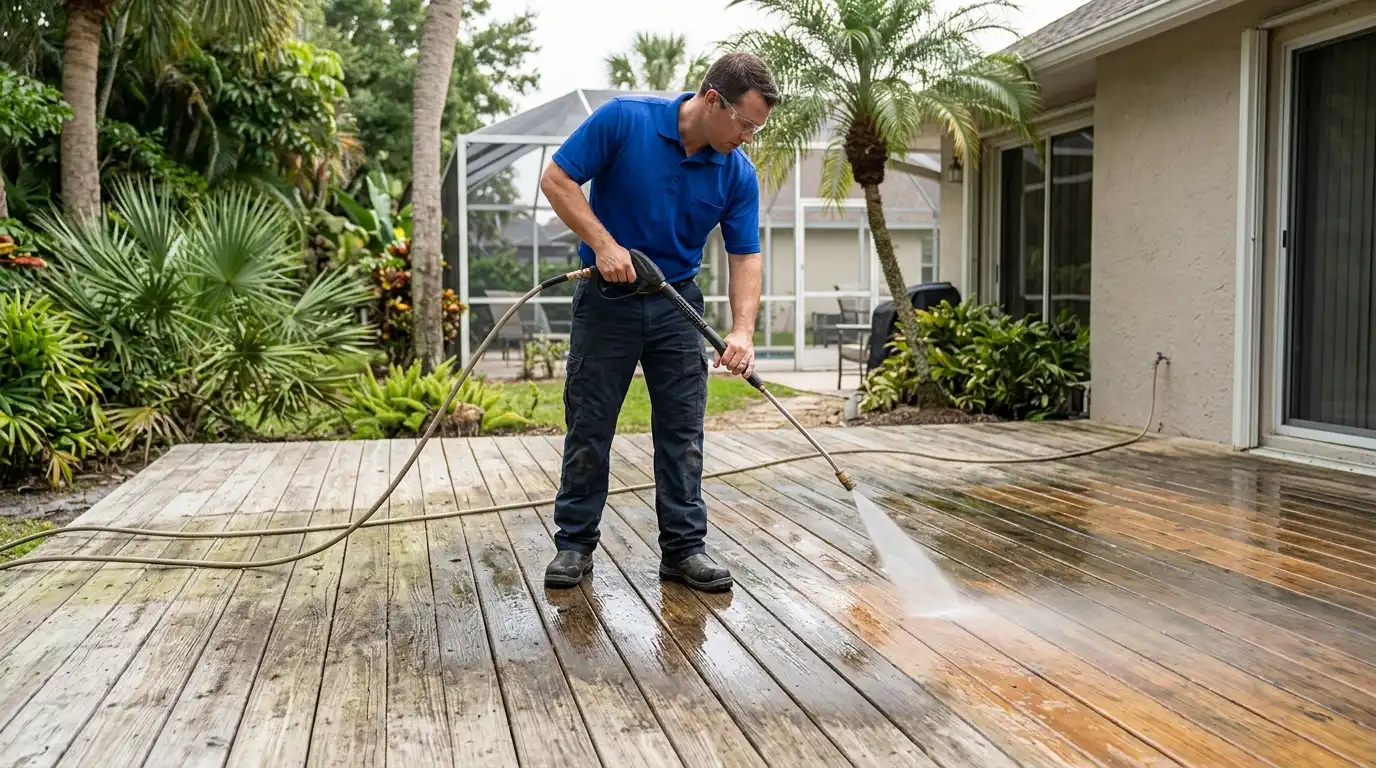
Pressure should support the cleaner, not replace it. For most wood decks, roughly 1,200 to 2,000 PSI with a fan tip is enough, used in smooth passes that follow the grain. Keep the tip moving, keep a steady distance, and use overlapping strokes. If a stain does not lift, apply more cleaner and give it more dwell time, rather than moving closer or pressing harder.
Too much pressure furs the wood, raises the grain, and leaves marks that show through a new finish. It can also drive water deep into soft boards. A gentle wash that leaves the surface clean and even is a better result than a forceful wash that leaves the wood rough and damaged. The same care applies when cleaning other outdoor surfaces, as our guide to DIY pressure washing mistakes that damage stucco, shingles, and pavers explains.
How Long to Let a Deck Dry
Drying is the part most often rushed, and it is the part that decides whether a finish lasts. Allow at least 24 to 48 hours of dry weather as a minimum. In Florida humidity and shade, 48 to 72 hours is safer, because damp air and shaded boards dry slowly. A moisture meter reading of about 12 to 15 percent is a useful target before coating.
A simple sprinkle-water test also helps. Sprinkle a little water on the boards. If it soaks in quickly, the wood is ready to accept stain or sealer. If it beads on the surface, the wood is still too wet or sealed by old finish. Rain resets the drying clock, so count dry days only, and check the driest and the most shaded areas, not just the sunny boards.
Light sanding after drying knocks down raised grain and leaves a smoother surface for the finish. Sweep or blow away all dust before coating, and check the forecast again before starting.
New Wood, Weather, and Timing
New pressure-treated lumber needs time before staining. Weeks to months may pass before the wood is dry enough, depending on the lumber, the weather, and how much sun the deck receives. Test periodically with the sprinkle-water test and a moisture meter, and wait until the wood absorbs water readily.
Choose coating weather with care. Ideal conditions are roughly 50 to 85 degrees Fahrenheit, with no rain forecast for 24 to 48 hours after coating. Avoid coating in direct, hot sun, when the surface is too hot, or when rain is expected overnight. A calm, dry stretch gives stain and sealer the best chance to bond and cure.
Mistakes That Make a New Finish Peel
The most common mistakes are easy to avoid. Coating a dirty deck, coating before the wood is dry, letting cleaner dry on the boards, using too much pressure, and skipping the brightener all weaken the bond. Rushing the job in humid weather has the same effect. Each step in this guide exists to prevent one of those mistakes, and skipping a step usually shows up later as peeling or patchy wear. For related outdoor surfaces, a paver cleaning and sealing routine follows the same principle: clean, dry, and prepare before sealing.
Frequently Asked Questions
How soon can I stain after cleaning a deck?
Wait at least 24 to 48 hours, and 48 to 72 hours in Florida humidity or shade. Use a moisture meter, aiming for about 12 to 15 percent, and the sprinkle-water test. If water beads, wait longer.
Do I need a wood brightener after cleaning?
Yes, in most cases. A brightener neutralizes the cleaner, opens the pores, and evens the tone of the wood. It is a short step that helps stain and sealer bond evenly.
Can I stain a new pressure-treated deck right away?
No. New pressure-treated lumber usually needs weeks to months to dry. Test it periodically, and stain only when water soaks in readily and the moisture reading is in the target range.
What pressure should I use on a wood deck?
Roughly 1,200 to 2,000 PSI with a fan tip is enough for most wood decks, used in smooth passes that follow the grain. Let the cleaner do the work, and do not move closer or press harder to force a stain to lift.
What if it rains while my deck is drying?
Rain resets the drying clock. Let the deck dry again for the full period, and test the moisture before coating. Do not coat a deck that is still damp from rain.
When Can I Seal a Deck After Cleaning?
Wait at least 24–48 hours after cleaning before sealing a deck, and allow 48–72 hours in Florida humidity or shade. The wood must be fully dry so the sealer can soak into clean wood fibers and bond evenly — sealing a damp deck traps moisture and makes the finish peel. Use a moisture meter to check before you seal.
How Do I Seal A Deck After Cleaning?
Once the deck is dry, at least 24 to 48 hours after cleaning, or 48 to 72 hours in Florida humidity or shade, check it with the sprinkle-water test and a moisture meter reading of about 12 to 15 percent. Then apply the sealer in thin, even coats, following the directions on the product, in calm, dry weather of roughly 50 to 85 degrees Fahrenheit, with no rain forecast for 24 to 48 hours after coating.
Get the Prep Right, Then Coat with Confidence
A clean, dry, brightened deck gives stain and sealer the best surface to bond to, and the extra days spent on preparation usually pay off in a finish that lasts longer and wears more evenly. If the deck needs a thorough clean before staining or sealing, Pressure Washing Pros can help with a professional deck cleaning visit in Vero Beach. Call 877-510-5549 to arrange a visit.