Paver Cleaning and Sealing: Joint Sand, Efflorescence, and When to Reseal
Pavers give a driveway, patio, or pool deck a finished look that plain concrete cannot match. They also ask for more care than plain concrete. In Vero Beach, where afternoon rain, humidity, and strong sun take turns on the same surface, pavers slowly lose their color, their joints empty out, and a white haze can appear across the stones. None of that means the pavers are failing. It usually means they are due for a proper clean, fresh joint sand, and a new coat of sealer — in that order.
Cleaning and sealing are often talked about as one job, but they are two different jobs, and the order matters. Sealer locks in whatever is underneath it. Seal a dirty paver and you seal the dirt in with it. Seal over half-empty joints and the sealer has nothing to hold. Get the sequence right, though, and pavers come back to life: color deepens, joints stay put, weeds stay out, and the next cleaning is far easier.
This guide walks through the process the way it should run, what joint sand actually does, what that white film on new pavers is, and how to tell when a reseal is due.
Why Pavers Lose Their Looks in Florida
Pavers are individual stones set on a sand bed, locked together by the sand swept into the joints between them. That design is their strength — a single paver can be lifted and reset — and also the reason they need regular attention. Every Florida summer works against them in a few quiet ways.
Rain washes joint sand out a little at a time, especially where water runs across a driveway or pools at the edge of a patio. Sun fades the color on the surface, so a driveway that once looked rich and warm turns pale and dusty. Humidity feeds algae and mildew in the joints and on shaded pavers, turning them dark or green. And because pavers are porous, oil drips, rust, and leaf stains soak in rather than sitting on the surface where a quick rinse would remove them. It creeps up over a season or two, which is why many homeowners only notice it when a neighbor reseals and the difference between the two driveways suddenly becomes obvious.
The Right Order: Clean First, Then Sand, Then Seal
A lasting paver seal follows the same four steps every time. Skipping one is the most common reason a fresh seal flakes, clouds, or peels within months.
Step 1: Clean the pavers thoroughly
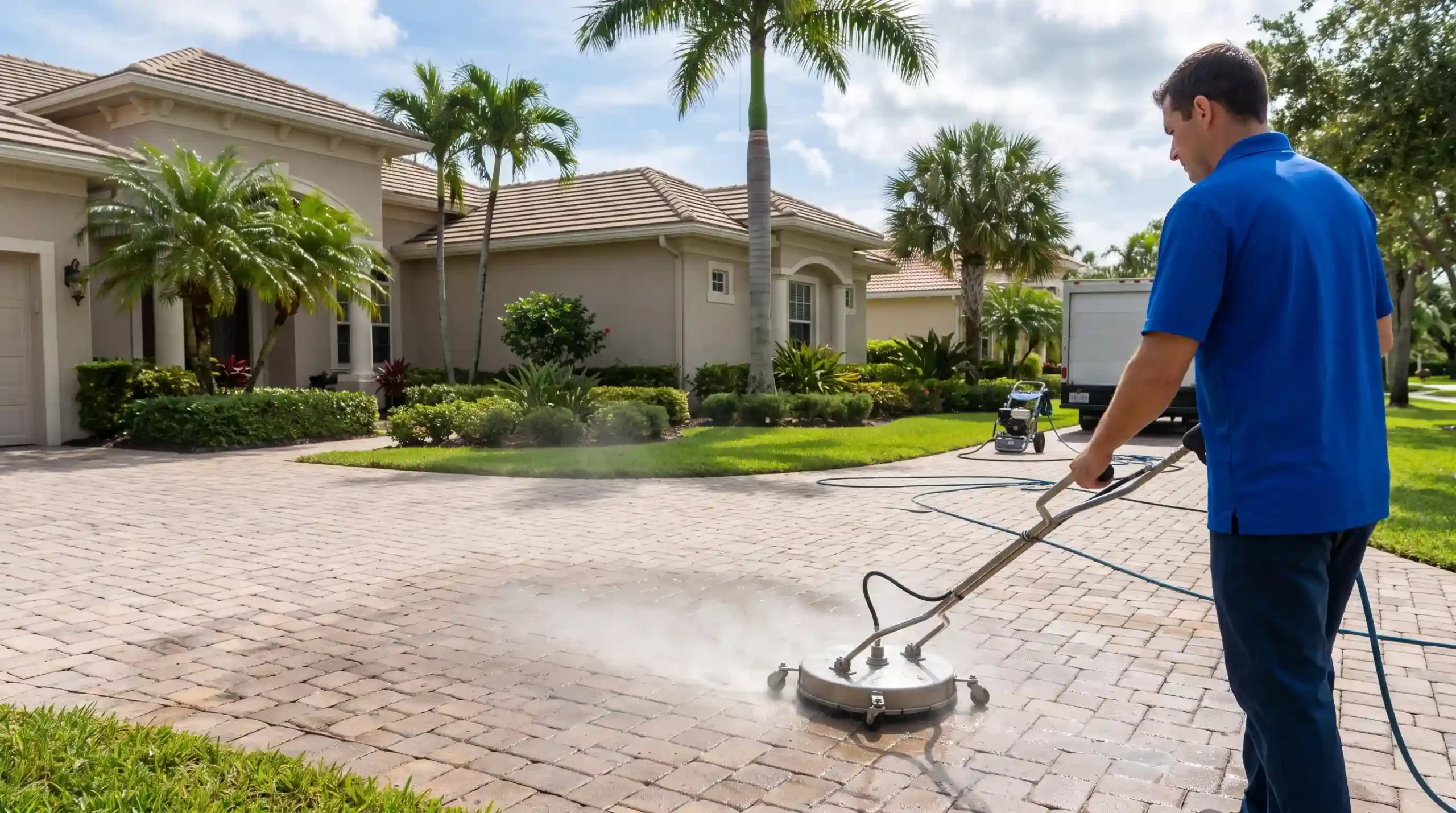
Everything starts with a deep clean. Loose dirt and leaves come off first, then stains get treated one by one: a degreaser for oil and tire marks, a rust treatment for orange stains, and a cleaner made for algae and mildew in the joints. Then the whole surface gets an even wash with a surface cleaner, which keeps the pressure steady across every paver instead of leaving stripes.
The point of this step is not just to make the pavers look clean. Dirt, mildew, and old sealer left on the surface keep new sealer from bonding, so a surface that looks clean but still holds algae in the joints will shed its new seal in patches.
Step 2: Re-sand the joints
Once the pavers are clean, fresh joint sand gets swept into every joint until it sits just below the paver edge. This is the step do-it-yourself jobs most often rush or skip, and it matters more than the sealer itself. The sand is what locks the pavers together, keeps them from shifting underfoot or under tires, and blocks weeds and ants from moving into the gaps.
Polymeric sand, which hardens when it is misted with water, is a common choice because it resists washing out in the next storm. Whichever sand is used, every grain of dust must be blown off the paver faces before the sand is wetted — dust left on the surface hardens into a permanent white haze.
Step 3: Let everything dry completely
Sealer and moisture do not mix. After washing and re-sanding, the pavers need to dry fully — often a full day in the sun, longer in shaded areas or after heavy rain. Sealing over damp joints is the fastest route to a cloudy, milky finish and poor adhesion. Patience here is what separates a seal that lasts from one that turns white within weeks.
Step 4: Apply the sealer in thin coats
Sealer goes on in two thin coats rather than one heavy one, worked in sections while keeping a wet edge. Film-forming sealers deepen the color and lock the joint sand in place, and they usually need a recoat every two to three years. Penetrating sealers soak in without changing the look as much and can last longer on quieter surfaces. Either way, thin and even beats thick every time — a heavy coat is what turns slick and peels.
Joint Sand: The Part Most People Skip
If there is one part of paver care that gets overlooked, it is the sand between the stones. Homeowners see the paver faces, so they think about cleaning and sealing the faces. But the joints do the structural work.
When joints empty out, pavers start to rock underfoot, edges spread, and weeds take hold in the gaps. Ants follow, piling sand on the surface as they hollow out the joints from below. A pressure washer held too close will blast sand straight out of the joints, which is why a professional wash uses a surface cleaner and steady, even pressure instead of a wand at close range. If your joints keep emptying after every rain even with fresh sand, the edge restraints may be failing, and that is a repair job, not a cleaning job.
That White Haze: Efflorescence, Explained
A whitish film on pavers, especially new ones, is usually efflorescence — mineral salts carried to the surface by water as the pavers cure and dry. It is a natural process in concrete products, not a defect, and it often fades on its own within months. But it can also be sealed in by mistake, and once it is trapped under sealer, it is far harder to deal with.
That is why new pavers should wait before their first seal — commonly two to three months at least, and some manufacturers suggest up to a year — so the salts have time to surface and be treated first. An efflorescence cleaner knocks most of the haze down before the sealer goes on. If a white haze appears under an existing seal, it usually means moisture was trapped during application, and the fix may mean stripping the old sealer and starting over. Waiting and cleaning first is always cheaper than stripping later.
When to Reseal: The Signs to Watch For
Most paver surfaces in Florida need a reseal about every two to three years, with driveways and pool decks on the shorter end. The pavers themselves will tell you when they are due:
- The color looks faded or dull. Sealed pavers hold a rich, even tone. When the color washes out and the surface looks dusty, the sealer has worn thin.
- Water soaks in instead of beading. After rain or when the sprinklers run, sealed pavers shed water the way a freshly waxed car hood does. If water darkens the pavers and soaks straight in, the barrier is gone.
- Weeds or ants show up in the joints. Sprouting weeds and ant piles mean the joint sand is compromised and the sealer that locked it in has worn away.
- Stains stick around. When oil, rust, or leaf stains stop rinsing off and start soaking in, the protective layer is no longer doing its job.
- Pavers start to shift. A rocking paver or a spreading edge means the joints have lost sand — clean, re-sand, and seal before it becomes a repair.
A quick look once a year is enough to catch these signs early, before a clean and reseal turns into a repair bill.
What Sealing Cannot Fix
Sealing protects pavers that are in good shape. It does not fix pavers that are sinking, heaving, or rocking underfoot — those point to the base underneath, and need the pavers lifted and reset before any sealer goes down.
The same goes for old, peeling sealer. A new coat over a failing one will not bond, and it will peel with the old layer, so peeling sealer usually needs to be stripped first. And if your pavers went in within the last couple of months, wait — sealing too early traps moisture and salts, and the white haze that follows is hard to undo.
Frequently Asked Questions
How often should pavers be resealed in Florida?
Most homes land on every two to three years, with driveways and pool decks closer to two. A yearly look at the color, water beading, and joints is the best way to judge.
Can I seal my pavers right after pressure washing them?
Not right away. The pavers need to dry completely first — usually at least a full day, longer in shade. Sealing over damp joints traps moisture and causes a cloudy white finish.
Does sealing make pavers slippery?
Film-forming sealers can make a smooth surface slicker when wet, especially around pools and steps. A non-slip grit can be mixed into the sealer for those areas. Penetrating sealers change the surface feel far less.
Do I have to seal my pavers at all?
No — sealing is optional, and unsealed pavers still work fine. But sealing deepens the color, locks the joint sand in place, and makes stains far easier to clean.
Ready to Bring Your Pavers Back?
If your driveway, patio, or pool deck is looking faded, sandy, or stained, Pressure Washing Pros can clean it properly, re-sand the joints, and seal it so it stays looking that way. Call (877) 510-5549 for a free quote, or visit our Paver Cleaning & Sealing page to see what the service includes.


