Vero Beach and Hurricanes: How to Prepare Your Home’s Exterior Before a Storm — and Clean Up After
Living in Vero Beach means living close to the water, with warm air, bright light, and a coastline that shapes everyday life. It also means living with hurricane season. From June through November, homes across Indian River County face the same seasonal pattern: long, humid weeks, sudden tropical downpours, and, in some years, a major storm that tests roofs, walls, walkways, and drainage all at once.
No amount of exterior cleaning can stop a hurricane, and storm preparation should never be treated as a cosmetic job. Preparation is practical: removing what can move, stain, or trap water, and giving your home the best chance of shedding rain cleanly. Cleanup is just as practical: restoring safe footing, removing the grime and growth that wet weather leaves behind, and catching small problems before they become lasting marks.

Before the Storm: Exterior Prep That Matters
Clear loose debris and items that stain or blow around
Start with a slow walk around the whole property, looking for anything that is not fixed in place. Garden tools, plant pots, loose pavers, outdoor cushions, toys, and small pieces of timber can become hazards in high wind, and they can also leave marks. A pot tipped onto a walkway, a chair left against siding, or leaves pressed against a wall can all leave stains that are harder to remove after days of rain.
Move loose items indoors or into a garage or shed where they cannot be lifted, dragged, or thrown against the house. Clear leaves, palm fronds, and small branches from patios, steps, and pool surrounds, especially in corners and low spots where debris and water collect. A clear surface drains better, dries faster, and is much easier to clean after the storm.
Trim back overhanging vegetation touching walls and roofs
Branches that rest on a roof or brush against siding rub, scratch, and trap moisture against the surface. In a storm they can break, drag across shingles, or drop a heavy load of leaves into gutters and valleys. They also shade the wall beneath them, keeping it damp long after rain has stopped, which encourages algae and mildew.
Trim back growth so branches no longer touch the house, and clear the area above walkways and driveways where falling limbs could block a path. Do not climb onto a roof to do this work, and do not work near overhead lines. If a tree is large, damaged, or close to power lines, leave that part to a qualified tree professional.
Clear gutters and downspouts so water drains
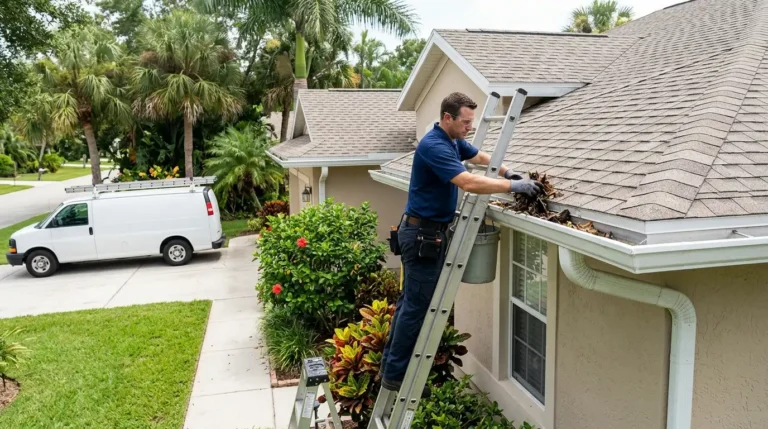
When gutters and downspouts are blocked with leaves, seeds, and silt, heavy rain has nowhere to go. It spills over the edge, runs down walls, soaks into soil beside the foundation, and leaves dirty streaks on fascia, soffits, and siding. Before the season reaches its peak, check that gutters are clear, downspouts are open, and water is directed away from the house rather than pooling at the base of a wall.
Note pre-existing algae and stains before the storm
Take a few minutes to note what your exterior already looks like. In coastal Florida, green and dark streaks on siding and roofs are common, and shaded walls and areas under trees often show algae, mildew, and general grime. Photographs taken from the same spots before and after a storm can help you tell old staining from new storm damage.
A gentle house washing before the season can remove surface growth and leave siding easier to inspect, while a careful roof cleaning approach can address dark streaks without harsh scrubbing that damages shingles. A clean, well-drained exterior is easier to look after, and problems are easier to spot.
After the Storm: What the Weather Leaves Behind
Standing-water marks and debris stains
Where water has stood against a wall, a fence, or a low step, it often leaves a tide line of silt, leaves, and fine mud. Debris pressed against siding or a driveway can leave a darker outline, especially if it sat there for days. Driveways and walkways are common trouble spots, because leaves, soil, and palm debris wash across them and settle into joints, cracks, and textured concrete, holding moisture against the surface.
Algae and mold bloom in the wet weeks after
Florida’s climate already favors algae growth, and a hurricane adds exactly the conditions it needs: warmth, moisture, and organic debris. In the weeks after a storm, green films can appear on siding, fences, and pool enclosures, while dark streaks can deepen on roofs. Walls that were already shaded or damp are usually the first to show it, and early cleaning helps, because surface growth is much easier to deal with than growth left to deepen and spread.
Salt spray film on coastal homes
Homes near the coast can also be left with a fine salt film after strong onshore winds. It may look like a dull haze on windows, railings, and painted surfaces, and it can feel slightly gritty to the touch. Salt attracts moisture, so a salty film can keep a surface damp and dull, and make other grime cling more firmly. A gentle rinse with clean water is often the best first step, before any deeper cleaning, because rubbing a dry, salty surface can drag grit across paint and glass.
Slippery walkways and pool decks
One of the most immediate post-storm problems is also one of the easiest to underestimate: slippery surfaces. Algae, mud, and wet leaves on walkways, steps, and pool decks can make a familiar path treacherous, especially in the early morning or after another shower. Clear loose debris by hand first, then rinse carefully, and take extra care around steps, slopes, and pool edges until surfaces have been properly cleaned and dried. If a surface still feels slick after a rinse, algae or fine silt is still present.
What to Clean First, and How
Safety first: no cleaning near downed lines or damage
Do not start cleaning until it is safe to do so. Stay away from downed power lines, damaged electrical equipment, and any area where water may be in contact with wiring. Do not climb onto a damaged roof, walk on a weakened deck, or move heavy debris that may be hiding a hazard. If you see structural damage, a leaning tree, or a suspected gas or electrical problem, leave it alone and contact the appropriate utility or emergency service.
Wait until power and water supplies are stable, and check the property in daylight before bringing out any equipment. Cleaning can wait. Safety, and a clear view of what has actually been damaged, cannot be rushed.
Rinse salt and mud early
Once the property is safe, an early, gentle rinse is often the most useful first clean. Rinse salt from windows, railings, and siding, and wash mud and silt from walkways and driveways before they dry into a hard layer. Work from the top down on walls, and from the house outward on flat surfaces, so dirty water does not run back over an area you have just rinsed. This early rinse will not remove deep algae, but it removes the loose layer that makes everything else harder, and reveals tide marks and patches of growth that need a proper wash.
Soft washing for siding and roofs, pressure for concrete
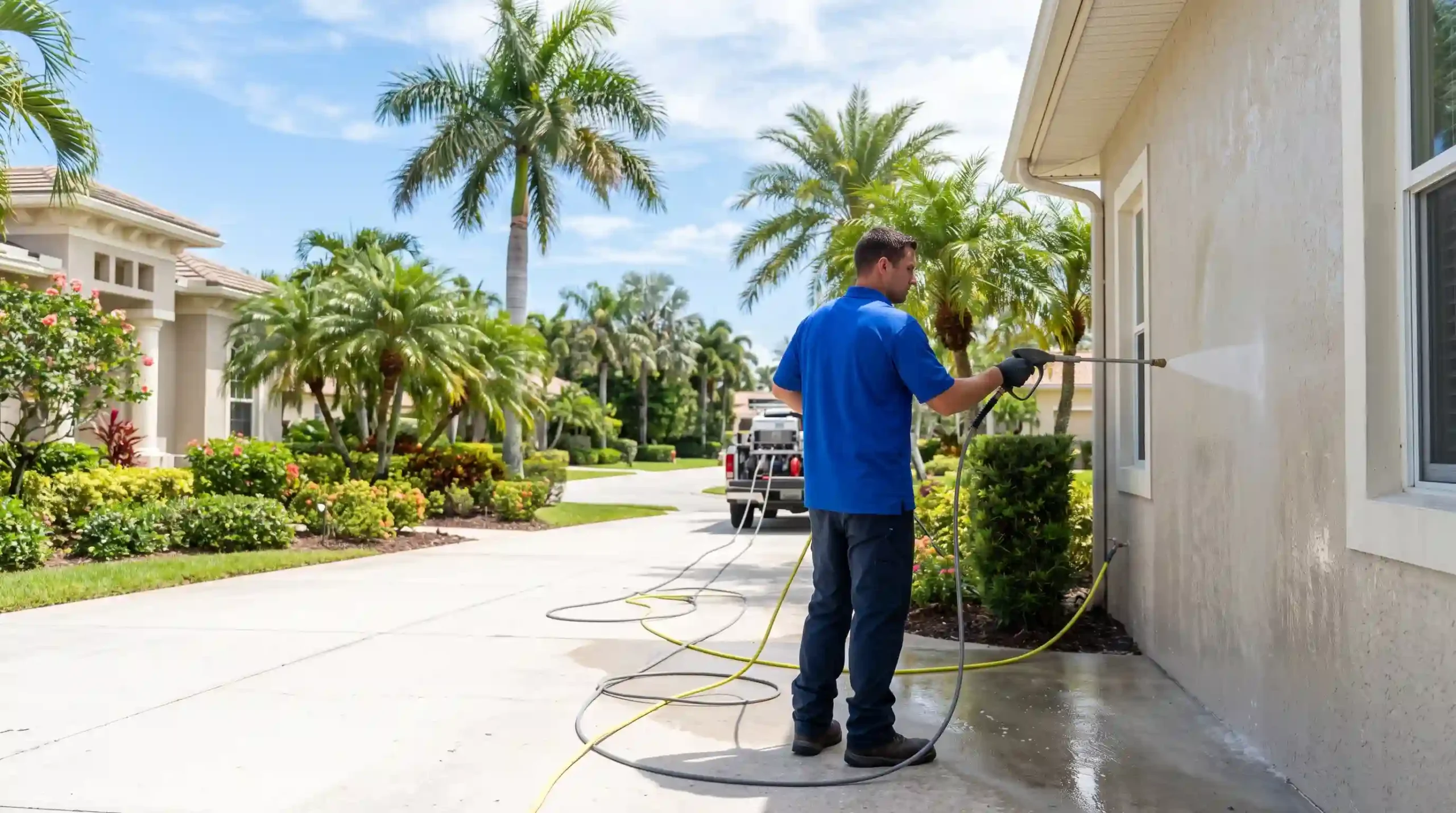
Different surfaces need different methods, and using the wrong one can cause more harm than the storm. Soft washing uses low pressure and a cleaning solution to treat algae, mildew, and grime on delicate surfaces. It is the gentler choice for siding, stucco, painted surfaces, and roofs, where high pressure can strip paint, force water under shingles, or damage the surface.
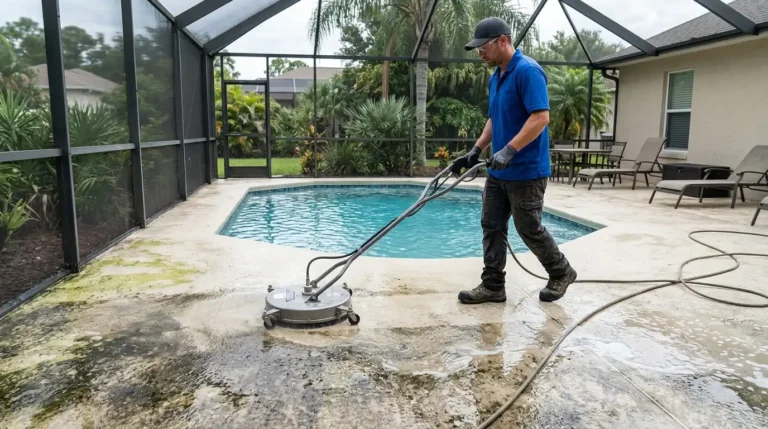
Pressure washing, by contrast, uses higher pressure to lift dirt, mud, and algae from hard, durable surfaces. It is well suited to concrete driveways, sidewalks, and many pool decks. Our driveway cleaning work focuses on those hard surfaces, where mud, leaves, and algae can settle deep into the texture of concrete. Even here, care matters: pavers, joints, and older concrete need a measured approach, and a cracked or damaged surface should be checked before any high-pressure work.
When to call a professional, and when DIY is enough
A light rinse, a clear-up of loose debris, and a careful wash of a small, ground-level area are jobs many homeowners can handle. Larger areas, roofs, high walls, and surfaces that are still slippery or stained after a rinse are different. They need the right equipment, the right cleaning solution for the surface, and a method that cleans without forcing water where it should not go.
Consider professional help if the area is large, if you need to work at height, if the roof or siding is involved, or if you are unsure whether a stain is surface grime or a sign of damage underneath. A professional clean can also be a useful inspection: once grime and growth are removed, it is easier to see cracked sealant, lifted shingles, damaged flashing, or a gutter that is still not draining properly.
Frequently Asked Questions
Is it safe to pressure wash right after a hurricane?
Only once power and water are stable and the property has been checked for damage. Stay away from downed lines, damaged wiring, and weakened structures, and do not work on a roof or at height after a storm. If you are unsure about safety, wait and ask for advice before starting any cleaning.
Will storm stains come off siding?
Many storm marks, including mud, debris outlines, salt film, and surface algae, can be removed with a gentle wash, especially if they are dealt with early. Stains left for a long time, or linked to damage underneath the surface, may need more than one treatment, or may reveal a repair that needs attention first.
How soon should post-storm cleaning happen?
As soon as it is safe, a gentle rinse of salt and mud is a good first step. A fuller clean is best done in the following days and weeks, before algae and mildew have time to deepen in the humid weather that usually follows a storm. The earlier surface growth is treated, the easier it is to keep the exterior clean, and safe underfoot.
If your Vero Beach home needs a careful clean after a storm, or a freshen-up before the next one, Pressure Washing Pros is here to help. Call 877-510-5549 to talk through what your exterior needs, and to arrange a clean that suits your siding, roof, driveway, and walkways.