House Washing Vero Beach, FL
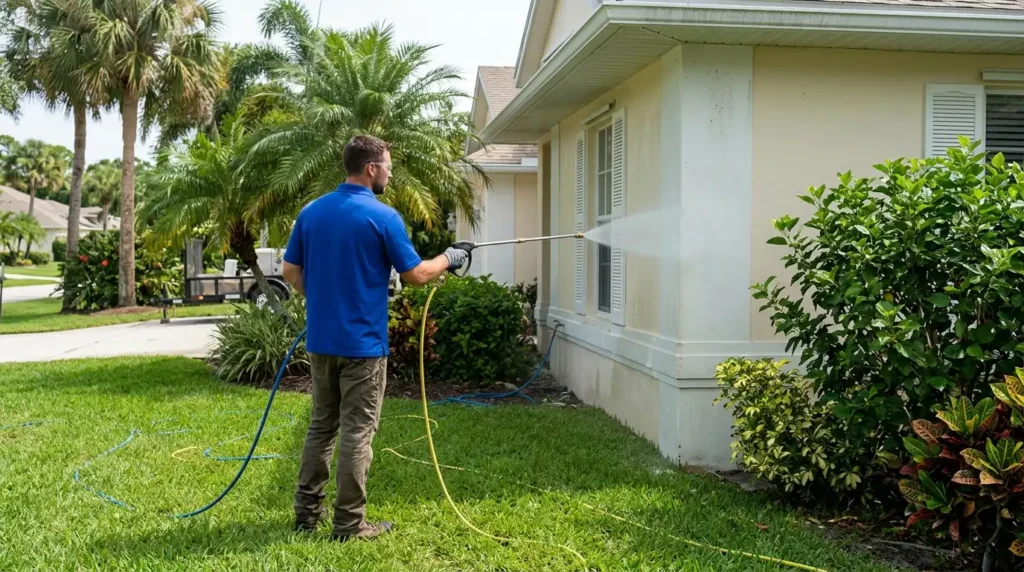
Florida weather can leave your home’s exterior covered in algae, mildew, dirt, pollen, and other buildup. Our house washing service uses the appropriate low-pressure cleaning method for your home’s exterior surfaces, helping restore a cleaner appearance without treating delicate materials like a driveway.
Is Your Vero Beach Home Looking Dirty or Discolored?
The outside of a home can collect more buildup than you notice from inside.
In Vero Beach, heat, humidity, frequent rain, coastal air, landscaping moisture, and shaded areas can create the right conditions for algae, mildew, mold, dirt, and organic buildup to develop on exterior walls.
You may notice:
A professional house wash can remove much of this surface buildup and bring back a cleaner, brighter appearance.
House Washing Built for Vero Beach Homes
Vero Beach homes can have different exterior materials, and they do not all respond to cleaning the same way.
Stucco, painted surfaces, vinyl siding, fiber cement, wood siding, soffits, fascia, and trim each require an appropriate cleaning approach.
That’s why we assess the exterior before cleaning rather than using the same pressure everywhere.
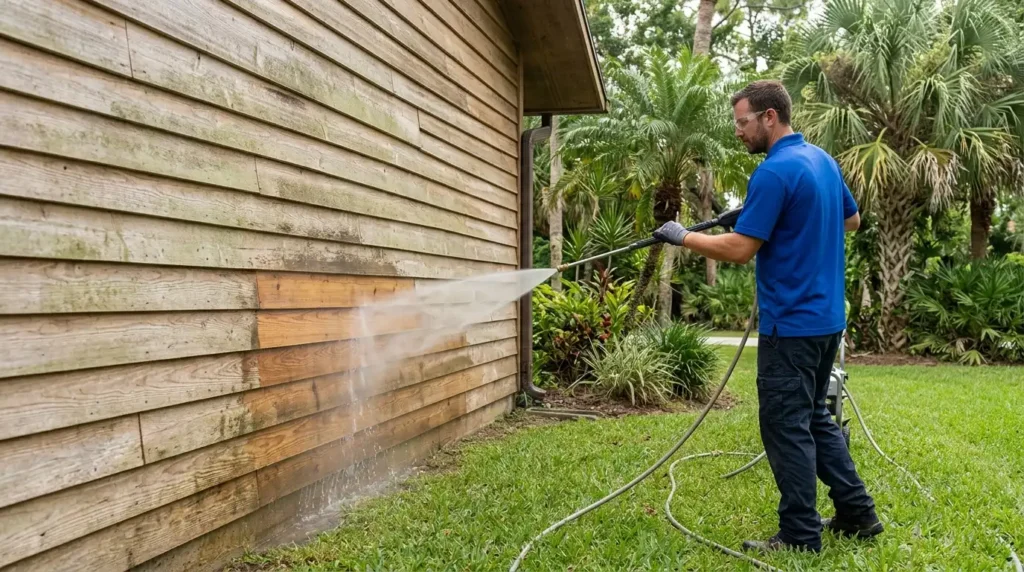
For many home exteriors, soft washing is the better approach. It combines a suitable cleaning solution with low-pressure application and rinsing to remove organic growth and surface buildup without relying on aggressive pressure.
The goal isn’t simply to blast dirt off the wall. It’s to clean the surface while protecting the material underneath.
What Does House Washing Include?
Our house washing service can address a range of exterior areas depending on the property and surface condition.
Exterior Walls
Remove dirt, algae, mildew, pollen, and general weather-related buildup from exterior walls.
Stucco
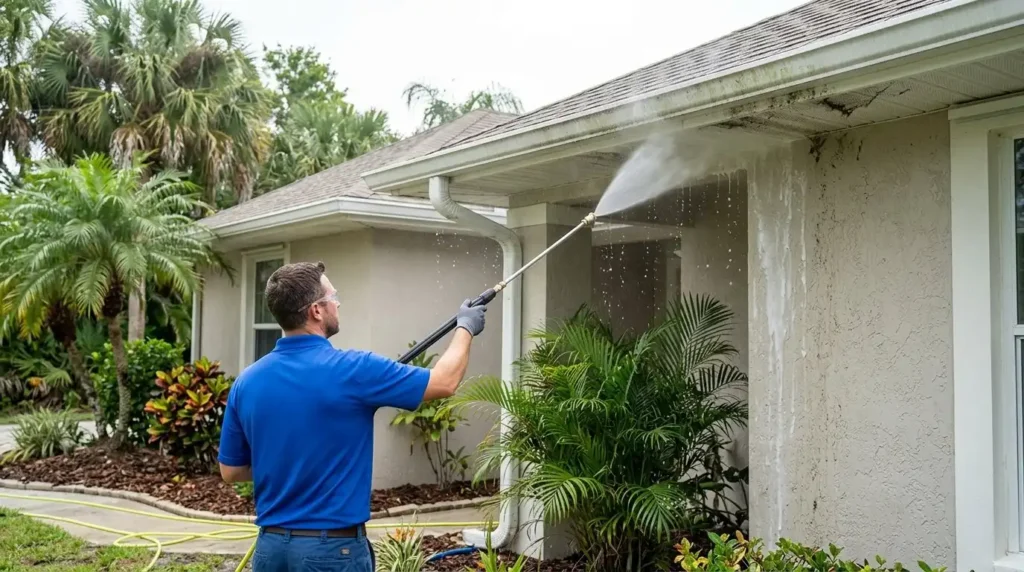
Clean textured stucco carefully to address algae, mildew, dirt, and other organic buildup without aggressive pressure.
Siding
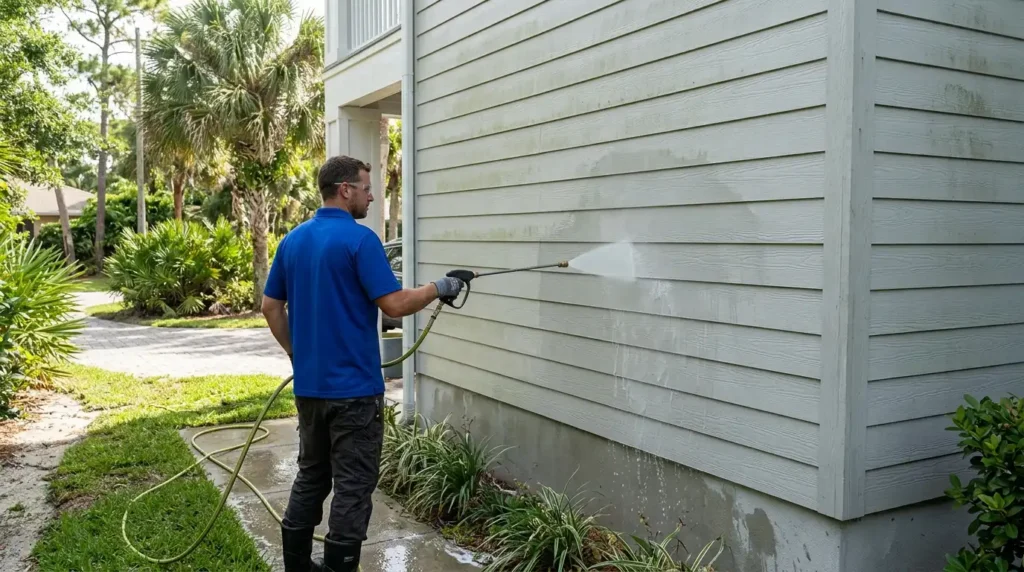
Clean vinyl, fiber cement, painted, and other suitable siding materials using a method appropriate for the surface.
Soffits & Fascia
Remove dirt, cobwebs, algae, mildew, and buildup from areas underneath roof edges and around the upper exterior of the home.
Trim & Exterior Details
Clean exterior trim, entry areas, and other suitable surfaces where dirt and organic growth accumulate.
Shaded & Moisture-Prone Areas
Pay additional attention to areas that stay damp longer, including shaded walls and sections affected by irrigation or vegetation.
Soft Washing vs. High-Pressure House Washing
Why House Washing Uses a Different Cleaning Method
A driveway is designed to handle considerably more pressure than many residential exterior surfaces.
Using excessive pressure on siding, painted surfaces, stucco, or other delicate materials can create unnecessary risk. The correct cleaning method depends on the material, condition, and type of buildup.
Soft washing uses a cleaning solution and low-pressure application to loosen and treat organic growth before the surface is rinsed.
| Cleaning Method | Soft Washing | High-Pressure Washing |
|---|---|---|
| Water Pressure | Low pressure | Higher pressure |
| Best Suited For | Stucco, siding, painted surfaces, soffits, and other delicate exteriors | Durable surfaces such as concrete |
| Main Purpose | Treat and remove organic growth and surface buildup | Remove surface dirt and heavier buildup |
| Surface Risk | Lower when the correct method is used | Higher on delicate materials if excessive pressure is used |
| House Exterior Use | Commonly appropriate for residential exteriors | Should be used carefully and selectively |
Why Soft Washing Works Well for Florida Homes
Florida’s warm, humid environment can encourage organic growth on exterior surfaces.
A water-only rinse may remove loose dirt, but it does not necessarily address the source of algae and mildew.
Soft washing combines:
- Appropriate cleaning solution
- Low-pressure application
- Adequate dwell time
- Controlled rinsing
- Surface-specific cleaning methods
This allows the cleaning process to focus on organic buildup instead of relying entirely on water pressure.
For Vero Beach homes, this can be particularly useful on stucco, siding, soffits, fascia, and other exterior areas where aggressive pressure isn’t appropriate.
What Makes Vero Beach Homes Different?
Humidity, Rain, and Coastal Conditions
Vero Beach’s warm and humid climate creates conditions where moisture and organic growth can remain on exterior surfaces.
Homes near the coast can also experience exposure to salt air and moisture, while shaded areas may remain damp longer after rain.
Landscaping and irrigation can contribute as well. Sprinklers that repeatedly hit exterior walls can leave mineral deposits and keep sections of the surface wet.
This is why some homes develop visible buildup faster than others.
A house wash should take the property’s actual conditions into account instead of treating every exterior the same way.
Our House Washing Process
Exterior Inspection
We look over the home before cleaning begins.
We identify the exterior materials, visible buildup, areas of concern, windows, landscaping, and surfaces that may require a different cleaning approach.
Surface Preparation
The surrounding area is prepared before cleaning. Landscaping and other sensitive areas can be protected and rinsed as needed during the process.
Surface Treatment
The appropriate cleaning solution is applied based on the material and type of buildup being treated.
Low-Pressure Cleaning
The exterior is cleaned using the appropriate pressure and technique for the surface.
The objective is to remove dirt and organic buildup without unnecessary force.
Thorough Rinse
The treated surfaces are rinsed to remove loosened dirt, cleaning residue, and remaining buildup.
Final Check
The cleaned areas are inspected before the job is considered finished.
What Can House Washing Remove?
House washing can help remove or reduce many common types of exterior buildup, including:
Not every stain can be completely removed with a standard house wash. Rust, oxidation, deep discoloration, and certain mineral stains may require a different treatment.
House Washing for Different Exterior Materials
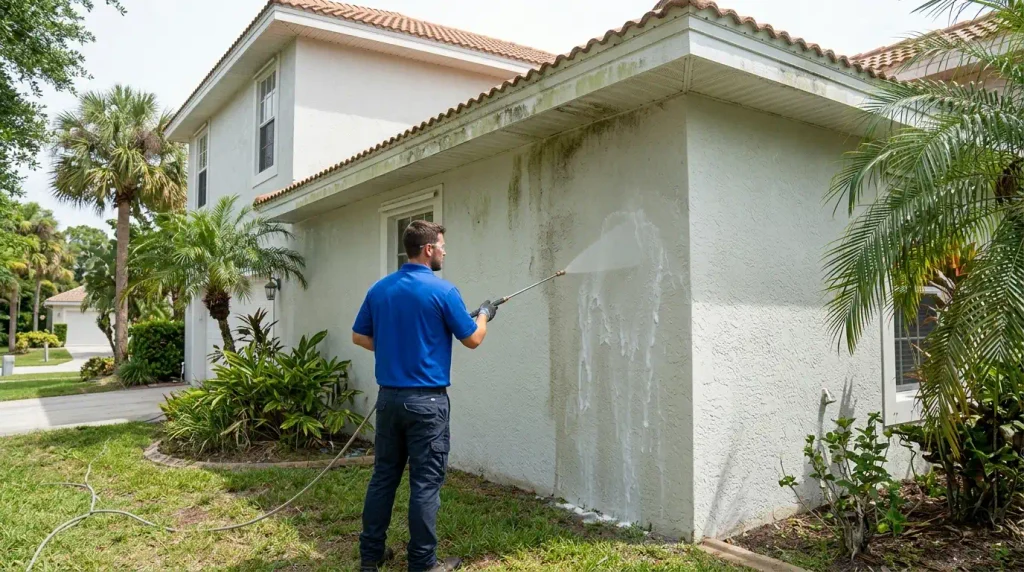
Stucco
Stucco is textured and can hold moisture, dirt, algae, and other organic material. It should be cleaned with an appropriate low-pressure approach rather than aggressive blasting.

Signs Your Home Needs a House Wash
You may want to schedule exterior cleaning if you notice:
Green or black discoloration
Visible algae or organic growth is often one of the clearest signs.
Dirty or gray-looking walls
Accumulated dirt and weather exposure can make an otherwise well-maintained home look neglected.
Mildew around shaded areas
North-facing walls, areas beneath overhangs, and sections surrounded by vegetation can stay damp longer.
Dirty soffits and fascia
Cobwebs, pollen, dirt, and organic buildup often collect around roof edges.
Algae around irrigation areas
Repeated sprinkler overspray can keep walls damp and contribute to staining.
Your home simply looks dull
Sometimes the buildup is subtle until part of the exterior is cleaned and the difference becomes obvious.
How Often Should You Wash a House in Vero Beach?
There isn’t one schedule that works for every home.
Many properties benefit from exterior cleaning approximately once a year, while homes exposed to heavy shade, humidity, irrigation overspray, coastal conditions, or recurring algae growth may need cleaning more frequently.
The right schedule depends on:
Instead of cleaning on a fixed schedule unnecessarily, inspect the exterior periodically and address buildup before it becomes difficult to remove.
How Much Does House Washing Cost in Vero Beach?
House washing prices vary from property to property.
The final cost can depend on:
A small single-story home with light buildup will not require the same amount of work as a larger multi-story property with heavy organic growth.
For that reason, the most useful way to price a house wash is to review the property and provide a clear quote based on the actual work required.
Why Choose Us For Professional House Washing?
The Right Method for the Surface
Different exterior materials require different cleaning approaches. We don’t treat stucco, siding, and concrete as if they were the same surface.
Attention to Exterior Details
Soffits, fascia, trim, shaded walls, entry areas, and other details can collect buildup that a basic hose rinse may leave behind.
Local Climate Awareness
Vero Beach’s humidity, rain, coastal exposure, vegetation, and irrigation conditions all affect how exterior surfaces accumulate buildup.
Clear Quotes
You should know what the cleaning involves before the work begins. Quotes should reflect the property’s size, condition, surfaces, and scope of work.
House Washing vs. DIY Pressure Washing
| Cleaning Factor | DIY Pressure Washing | Professional House Washing |
|---|---|---|
| Pressure Selection | Easy to use too much pressure for the surface | Pressure and cleaning method are selected based on the material |
| Paint & Siding | Higher risk of stripping paint or damaging siding | Uses an appropriate low-pressure cleaning approach |
| Stucco | Excessive pressure can damage the surface | Typically cleaned with a controlled, low-pressure method |
| Caulking & Seals | High pressure can force water into vulnerable areas | Cleaning is performed with attention to sensitive areas |
| Organic Growth | Water pressure may remove surface buildup without properly treating the growth | Cleaning solutions can be used to address algae, mildew, and other organic buildup |
| Surface Damage | Risk of etching, pressure marks, or other damage from incorrect technique | Method is adjusted according to the surface and its condition |
| Overall Approach | One machine and pressure setting may be used across different surfaces | Different surfaces are assessed and cleaned using the appropriate method |
FAQ’s
Ready to Clean Up Your Home’s Exterior?
Don’t let Florida weather leave your home looking dirty and neglected.
Get a clear quote for professional house washing in Vero Beach, FL.