Why Your Pool Deck Is Slippery — and How to Fix It Safely
A pool deck should feel safe under bare feet, even when it is wet. When it starts to feel slick, it is easy to blame the water itself. In most cases, though, the water is only part of the story. Something on the surface is reducing grip, and until that layer is dealt with, the deck will stay slippery no matter how often it is hosed down.
Florida pool decks face a tough combination: constant splash-out, shade from screen enclosures and landscaping, warm temperatures, and daily foot traffic. That combination encourages exactly the kind of growth and buildup that turns a deck into a slipping hazard.
The Main Reason Pool Decks Get Slippery: Algae
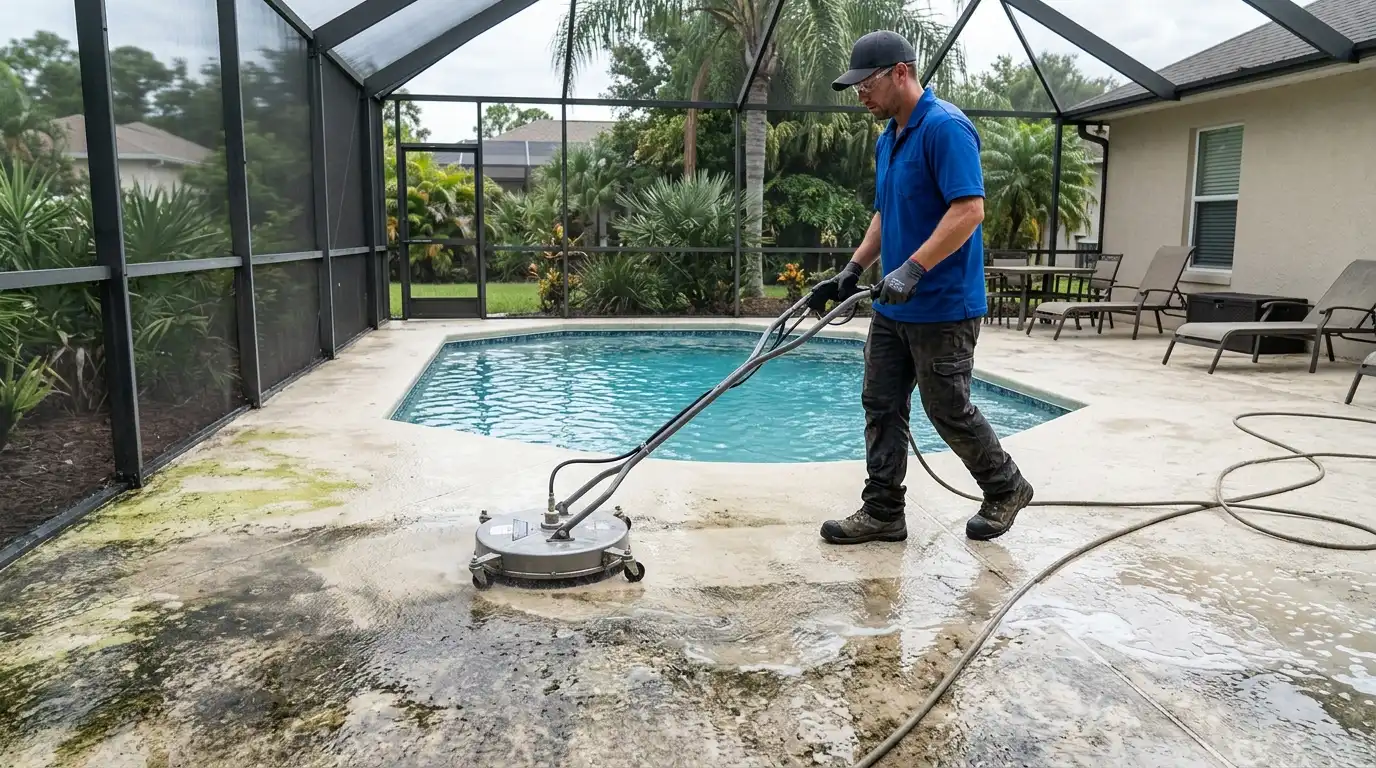
The most common cause is algae. Pool decks stay damp far longer than other outdoor surfaces. Splash-out keeps them wet, screen enclosures and trees limit direct sun, and foot traffic grinds moisture and organic matter into the surface. Algae thrives in those conditions, forming a thin, living film that you may barely see until it turns green or dark.
That film is what makes the deck slick. Dry, it may feel normal. The moment it gets wet, the film becomes slippery underfoot. This is why a deck can feel fine in the morning and treacherous after a swim session or an afternoon storm.
A quick rinse rarely solves the problem for long. Hosing the deck or giving it a fast pressure rinse can remove the visible surface layer while leaving algae in the pores of the stone or concrete. In a warm, humid climate, that remaining growth can return within weeks, and the deck is slick again. A lasting fix has to address the growth itself, not just the dirt sitting on top of it.
Other Causes Worth Checking
Algae is the usual suspect, but it is not the only one. A few other factors can make a pool deck slippery, and they often work together.
Sunscreen, body oils, and pool chemicals leave residues that build up over a season. On smooth concrete or sealed stone, that residue can create a slick layer of its own, especially near steps and entry points where people linger.
Worn texture is another factor. Some deck surfaces rely on a textured finish for grip. Years of foot traffic, weather, and overly aggressive cleaning can wear that texture smooth, leaving fewer points of contact for bare feet. Once the texture is gone, even a clean deck can feel slippery when wet.
Paver decks have their own issue. The sand between pavers can erode with rain, traffic, and high-pressure cleaning, leaving joints uneven and creating pockets where algae and moisture collect. Loose or shifting pavers can also change how the surface feels underfoot.
Finally, drainage matters. If water pools in low spots instead of running off, those areas stay damp longer and grow algae faster. A deck that always has standing water in the same corner will usually be the slickest part of the pool area.
How to Tell What Is Making Your Deck Slick
A quick look can narrow down the cause. Green, dark, or black patches, especially in shaded areas or near the waterline, point to algae or mildew. A chalky or powdery film may be mineral buildup or residue from pool chemicals. A surface that looks clean but still feels smooth and slick when wet may have worn texture or a layer of sunscreen and oil residue.
Pay attention to where the problem is worst. Algae tends to concentrate in shaded, slow-drying areas. Residue builds up near steps, ladders, and seating. Standing water marks the spots where drainage needs attention. Knowing the pattern helps decide whether the deck mainly needs a thorough clean, a change in maintenance, or attention to drainage and surface condition.
How to Fix a Slippery Pool Deck Safely
The safest fix starts gently. Clear the deck of furniture, toys, and loose debris, then sweep away leaves and dirt so the cleaning can reach the surface itself. A surface-matched cleaning solution can then break down algae and residue before rinsing, which matters far more than raw pressure.
For most pool deck materials, a soft-wash approach, meaning a cleaning solution followed by a low-pressure rinse, is safer than blasting the surface. Travertine, natural stone, and pavers can be damaged by harsh chemicals or aggressive pressure, and high pressure can strip joint sand from paver decks, making the problem worse over time. Concrete is more durable, but even concrete can be etched if pressure is pushed too high or held too close in one spot.
After cleaning, rinse thoroughly so no cleaning residue is left to make the surface slick again, and let the deck dry fully before judging the result. A deck that is still damp from cleaning will feel different from one that has dried and had its grip restored.
Once the deck is clean, a few habits help it stay that way. Sweep regularly so organic debris does not sit and feed new growth. Keep gutters and drainage clear so water does not pool. Trim back dense foliage where practical so shaded areas get more sun and air. And avoid directing sprinklers onto the deck, since constant extra moisture only helps algae return.
What About Anti-Slip Treatments?
Cleaning restores grip by removing the slippery layer, but some homeowners also ask about longer-term traction. Options exist, from textured coatings to anti-slip strips and mats, and the right choice depends on the deck material, how the area is used, and the look you want. Any coating or treatment needs a thoroughly clean, dry surface to bond properly, which is why cleaning always comes first.
It is worth being cautious with do-it-yourself coatings. A product applied over algae, residue, or a damp surface is likely to peel or fail early, leaving a worse surface than you started with. If you are considering a traction treatment, get the deck professionally cleaned first and ask for advice matched to your specific material.
How Often Should a Pool Deck Be Cleaned?
There is no single schedule that fits every home. A shaded deck beside a heavily used pool in a humid climate will need attention more often than a sunny, lightly used deck. As a general guide, many Florida pool decks benefit from a thorough cleaning at least once a year, with more frequent attention for shaded areas or decks that turn green quickly.
The better approach is to watch the surface rather than the calendar. If shaded corners start to darken, if the deck feels slick after rain, or if algae returns in the same spots, it is time for another clean. Waiting until someone slips is waiting too long. A regular routine keeps the deck safer and makes each cleaning easier, because growth has less time to work deep into the surface.
When to Call Pressure Washing Pros
Some pool deck cleaning is straightforward, but pool decks deserve extra care. The wrong pressure can damage stone, strip paver joints, or force water into places it should not go, and the wrong cleaner can harm nearby plants or leave residue in the pool area. A professional clean uses methods matched to the deck material, so algae and residue are removed without damaging the surface.
Pressure Washing Pros cleans pool decks and patios throughout the Vero Beach area, using the right approach for concrete, pavers, and stone. If your pool deck feels slippery, a professional assessment can identify whether algae, residue, worn texture, or drainage is the main cause, and what it will take to make the surface safe again.
Frequently Asked Questions
Why is my pool deck slippery even when it looks clean?
The slippery layer is often invisible. A thin film of algae or a buildup of sunscreen and oil residue can be hard to see when dry, but it becomes slick the moment it gets wet. If the deck looks clean yet feels slippery, the film is the most likely cause.
Can I just pressure wash my pool deck myself?
A careful, low-pressure wash with a suitable cleaner can help, but high pressure is risky on pool decks. It can damage stone, etch concrete, and blast sand from paver joints. Keep the nozzle moving, use a wide fan tip, and stop if the surface shows any sign of damage. For stone or paver decks, or for heavy algae, professional cleaning is the safer choice.
How can I keep my pool deck from getting slippery again?
Sweep regularly, keep drainage clear, and clean shaded areas before algae builds up. Limit extra moisture from sprinklers, and address standing water where it collects. A regular cleaning routine, rather than waiting until the deck turns green, is the simplest way to keep grip underfoot.
Ready for a safer pool deck? Call Pressure Washing Pros at 877-510-5549 to talk about your deck’s surface and the right cleaning approach for it.